
Even when the day is over, the mind keeps processing — conversations, tasks, unfinished thoughts. You try to rest, but your brain keeps going.
Soul Journeys is designed for exactly this kind of inner overload.

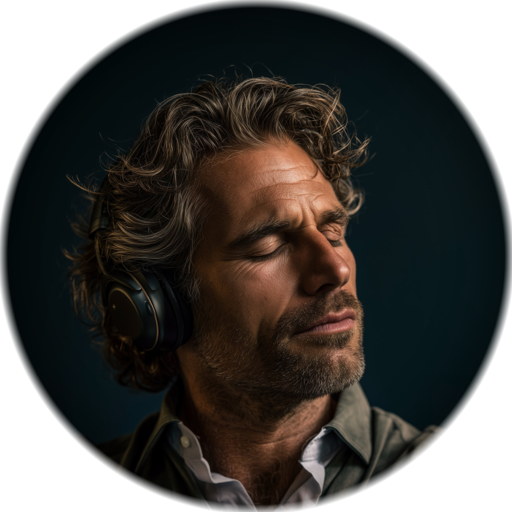
A short spoken introduction helps shift your attention away from everyday mental activity and prepare for the journey.
Then the sound takes over. Soul Journeys uses a carefully structured sound environment where electronic tones and organic recordings gradually merge into a continuous soundscape.
As attention moves away from the constant stream of thoughts, the mind begins to slow down naturally — creating space for calm and clarity.
You lie down or sit comfortably, close your eyes, and listen through headphones. The session begins with a short spoken introduction that helps you shift out of everyday mental activity.
Then the sound journey begins — a continuous soundscape of evolving electronic tones and organic recordings that slowly merge over time.
You do not need to analyse or control anything. The sound does not guide or instruct you. It simply creates the space and time for the inner process to unfold.

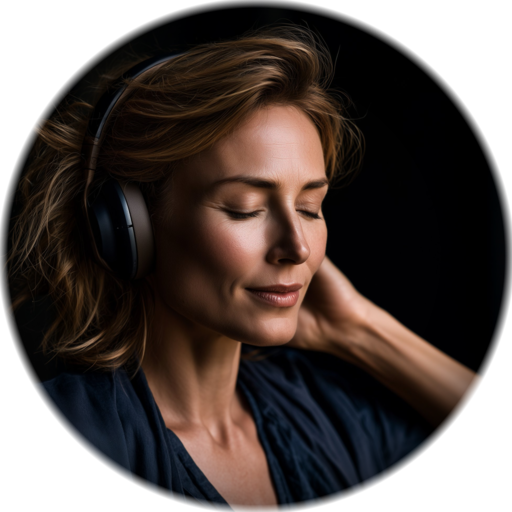
A sense of calm replaces constant mental activity. Emotional tension softens. Clarity begins to return.
Instead of trying to control thoughts, the mind naturally settles into a quieter and more balanced state.
Soul Journeys is designed for people who live with constant mental activity and emotional pressure.
For those who want a simple and private way to reset their inner state — without long conversations or complicated techniques.
This is not a course. It is not a meditation app.
It is a structured sound experience you can access whenever you need to step out of mental overload.
Each session is standalone. You choose one from the collection and listen on your own schedule.


Most people approach Soul Journeys expecting something familiar. A guided voice. Instructions. A technique to follow. Something that tells them what to do with their mind while the session runs. None of that is here.

The setup is simple. You lie down. Headphones on. Eyes covered. Phone silent. Forty to fifty minutes. That is the entire external structure of a Soul Journeys session. What happens inside that time is harder to describe — not because it is vague, but because it is individual in a way that makes general descriptions feel incomplete. Here is what is consistent across the experience:

The question people ask most often before trying Soul Journeys is: what will I experience? The honest answer is: we do not know. And that is not evasion — it is the actual structure of how this works. The sound environment is consistent. The design is precise.

Diana K.

Sasha L.
Alexander V.
E. Wuest
Maria S.
Elena R.
I. Petkovic
Alina

Sergey Khanukaev — composer, director, visionary in electronic sound, and certified Master of Neuro-Linguistics.
Sergey began walking his own path early. At 14, he stepped into independent life — exploring the world through travel, art, and creative work. 30 years in sound. For more than two decades, he has been creating boundary-pushing soundscapes and installations, driven by his fascination with self-regulating systems, stochastic processes, and the hidden rhythms of nature.
As a Master of Neuro-Linguistics, Sergey understands how language, rhythm, and emotional energy shape our inner world.
Through Soul Journeys, Sergey brings it all together: the innovation of sound design, the power of emotional release, the insight of neuro-linguistics — and the simplicity of being fully here.
It’s not meditation. It’s a return to what’s real — guided by the most honest instrument we have: sound.
For consultations and coaching visit consult.souljourneys.space

Mental fatigue doesn't feel like burnout, at least not at first. It's quieter. More civil. It shows up in things like scrolling without focus, rereading the same sentence three times, or walking into a room and forgetting why you're there. It's the mental equivalent of trying to swim through jelly.

There is a particular kind of exhaustion that doesn't respond to rest. You sleep. A whole weekend passes. You step away from the desk entirely. And yet Monday arrives with exactly the same feeling — a kind of flatness, a reluctance to engage, an inability to generate the energy the work requires. Notably, this is not laziness. It's not burnout in the clinical sense. It's what happens when a mind has been running on accumulated pressure long enough that effort itself becomes the problem.

Imagine waking up to the soothing sound of birds chirping outside your window. This natural symphony not only signifies the beginning of a new day but also uplifts your spirits, setting a positive tone for the day ahead.

In a world inundated with auditory stimuli, the distinction between music and noise often blurs, challenging traditional definitions and inviting introspection into the essence of sound. Is music merely organized noise, or can noise itself hold musicality waiting to be discovered?

The mind doesn't process information in real time as cleanly as we'd like to believe. Much of what you read, hear, see, and respond to in a given day doesn't fully resolve at the moment of encounter. It enters a queue. And that queue doesn't empty on its own. This is the residue problem. And it has a more direct effect on mental clarity and daily function than most people recognize.
| Category | Examples | Collected |
| A. Identifiers | Contact details, such as real name, email address, IP address | YES — email and IP only |
| B. Personal information as defined in the California Customer Records statute | Name, contact information, financial information | NO — payment data handled by Paddle |
| C. Protected classification characteristics under state or federal law | Gender, age, race and ethnicity, national origin, marital status | NO |
| D. Commercial information | Transaction information, purchase history | NO — handled by Paddle |
| E. Biometric information | Fingerprints and voiceprints | NO |
| F. Internet or other similar network activity | Browsing history, online behavior, interactions with our website | YES — analytics data only |
| G. Geolocation data | Device location | NO |
| H. Audio, electronic, sensory, or similar information | Images and audio, video or call recordings | NO |
| I. Professional or employment-related information | Business contact details, job title, work history | NO |
| J. Education Information | Student records and directory information | NO |
| K. Inferences drawn from collected personal information | Inferences drawn from any of the collected personal information listed above | NO |
| L. Sensitive personal information | NO |
| Provider | Role | Location |
| Paddle.com Market Limited | Merchant of Record, payment processing, tax, VAT | UK / USA |
| Twilio / SendGrid | Email delivery | USA |
| Mautic (self-hosted) | Email marketing automation | [Your server location — fill in] |
| Bunny.net | Audio/video streaming delivery | EU |
| Google Analytics | Analytics and performance measurement | USA |
| [Hosting provider — fill in] | Website hosting | [Location — fill in] |
These cookies collect information that is used either in aggregate form to help us understand how our Website is being used or how effective our marketing campaigns are, or to help us customize our Website for you.
| Name: | NID |
| Purpose: | Set by Google to set a unique user ID to remember user preferences. Persistent cookie that stays for 182 days |
| Provider: | .google.com |
| Service: | Google View Service Privacy Policy |
| Type: | server_cookie |
| Expires in: | 6 months |
| Name: | _ga |
| Purpose: | Records a particular ID used to come up with data about website usage by the user |
| Provider: | .souljourneys.space |
| Service: | Google Analytics View Service Privacy Policy |
| Type: | http_cookie |
| Expires in: | 1 year 1 month 4 days |
| Name: | _ga_# |
| Purpose: | Used to distinguish individual users by means of designation of a randomly generated number as client identifier, which allows calculation of visits and sessions |
| Provider: | .souljourneys.space |
| Service: | Google Analytics View Service Privacy Policy |
| Type: | http_cookie |
| Expires in: | 1 year 1 month 4 days |
These cookies are used to make advertising messages more relevant to you. They perform functions like preventing the same ad from continuously reappearing, ensuring that ads are properly displayed for advertisers, and in some cases selecting advertisements that are based on your interests.
| Name: | VISITOR_INFO1_LIVE |
| Purpose: | YouTube is a Google-owned platform for hosting and sharing videos. YouTube collects user data through videos embedded in websites, which is aggregated with profile data from other Google services in order to display targeted advertising to web visitors across a broad range of their own and other websites. Used by Google in combination with SID to verify Google user account and most recent login time. |
| Provider: | .youtube.com |
| Service: | YouTube View Service Privacy Policy |
| Type: | server_cookie |
| Expires in: | 5 months 27 days |
| Name: | YSC |
| Purpose: | YouTube is a Google-owned platform for hosting and sharing videos. YouTube collects user data through videos embedded in websites, which is aggregated with profile data from other Google services in order to display targeted advertising to web visitors across a broad range of their own and other websites. Used by Google in combination with SID to verify Google user account and most recent login time. |
| Provider: | .youtube.com |
| Service: | YouTube View Service Privacy Policy |
| Type: | server_cookie |
| Expires in: | session |
These are cookies that have not yet been categorized. We are in the process of classifying these cookies with the help of their providers.
| Name: | VISITOR_PRIVACY_METADATA |
| Provider: | .youtube.com |
| Type: | server_cookie |
| Expires in: | 5 months 27 days |
| Name: | wpEmojiSettingsSupports |
| Provider: | souljourneys.space |
| Type: | html_session_storage |
| Expires in: | session |
| Name: | elementor |
| Provider: | souljourneys.space |
| Type: | html_local_storage |
| Expires in: | persistent |
Everything you may want to know before, during, or after your Soul Journeys session.
This FAQ is provided for convenience only and does not form part of a separate contract. If there is any conflict between this FAQ and our Terms of Service, Privacy Policy, Cookie Policy, or Refund Policy, those documents take precedence.
If this is your first time, start with a session that speaks to where you are right now. Read the one-line descriptions in the shop and choose the theme that feels most relevant. There is no required order.
Each session begins with a short spoken introduction that helps shift your attention out of everyday mental activity. Then an immersive soundscape of electronic tones and organic recordings unfolds over 40–50 minutes. You do not need to analyse, concentrate, or do anything specific. The sound creates the conditions for the inner process to happen on its own.
No. Soul Journeys is a structured sound experience. It is not therapy, medical treatment, or a substitute for professional psychological care. If you have a medical or mental health condition, consult your healthcare provider before use.
Most people benefit from one session per week or less. Listen at your own pace. If you plan a more frequent schedule, consider booking a consultation at consult.souljourneys.space for personalized guidance.
A pair of quality over-ear or in-ear headphones that reproduce a full frequency range, and a quiet space where you won't be disturbed. A light eye cover is recommended for deeper immersion. Lie down if possible.
Consult your healthcare provider first, especially if you have epilepsy, severe anxiety, psychosis, cardiovascular issues, or are pregnant.
Pause or stop the audio, take slow breaths, and ground yourself. The session is not time-sensitive — you can return to it later. If strong discomfort persists, seek professional support.
Because Soul Journeys is an instantly accessible digital product, all sales are final. By proceeding to checkout you confirm that you waive the right to a refund once the audio has been delivered or streamed. If you experience a technical issue preventing access, email contact
contact@souljourneys.space within 72 hours and we will resolve the issue or reissue access.
Payments are processed by Paddle under PCI-DSS standards. We store only the data needed to provide your session and handle support requests. See our Privacy Policy for details.
This purchase includes on-demand email assistance for access or playback issues only. It does not include live coaching or ongoing guidance. For a personal consultation, book separately at consult.souljourneys.space.
Our focus is on private, self-paced practice. Sign up for the newsletter for updates. For group experiences or personal guidance, visit consult.souljourneys.space.
